Let’s be real for a second- screens are everywhere, from computers to tv’s, phones, and tablets; they can be easily accessed mostly because we’re the ones looking at them! You glance over at your kids, and you start to notice your littles having screen-time meltdowns -or you catch them staring blankly at a tablet or TV screen instead of learning. You might see the behavioral shifts and think, “It’s time to switch things up,” and the beautiful part is you’re not the only one who has felt this way.
Now that you’re picking up on the telltale signs that the amount of screen time has become a bit much for your littles, what you do from this day on can make all the difference in your home.

And here’s a plus: I’ve already made the switch for you so I can confidently share what we have been doing with our homeschoolers. You can keep your early elementary kids super engaged, promote independent learning, and you don’t have to be a one-man band entertaining them 24/7.
So, here are my 4 hands-on hacks we have implemented throughout our homeschool days to ditch the screens and keep the peace.
- Dust off the Vinyl Records
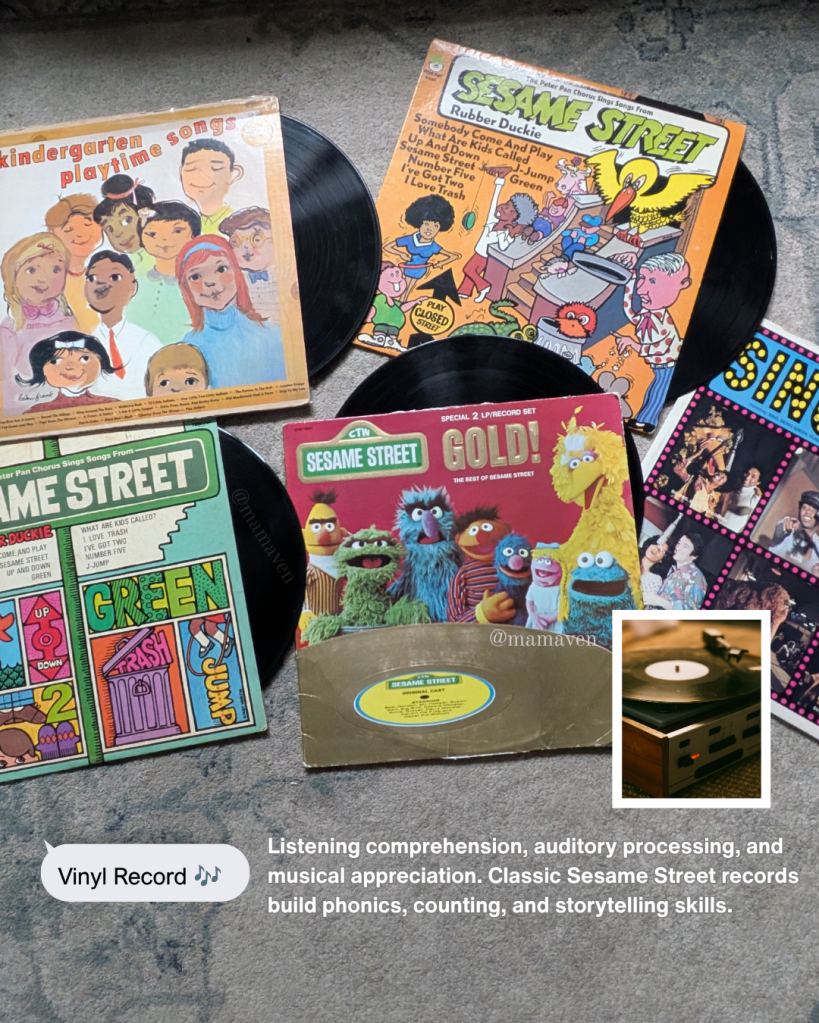
Turns out, my kids love to pull a record off the shelf and place the needle on to get the music going. Because their father is a collector of classic vinyls, our children have grown accustomed to handling the records and dropping the needle themselves.
Once I noticed how they handled physical music selections, I headed to our closest thrift store, searched online marketplace listings, and began collecting vintage Sesame Street and kids’ story albums just for them.
This works because the kids are involved in selecting what story or song they would like to listen to. As the parent, there is no worry about the wrong explicit songs showing up in the playlist (ask me how many times this has happened on our assistant devices) or the amount of screen light they’re exposed to because there is none. Listening becomes more intentional because the kids do not want to miss their favorite stories or songs they just pop on the record player.
2. Real Tabletop Games > Digital Mini Games
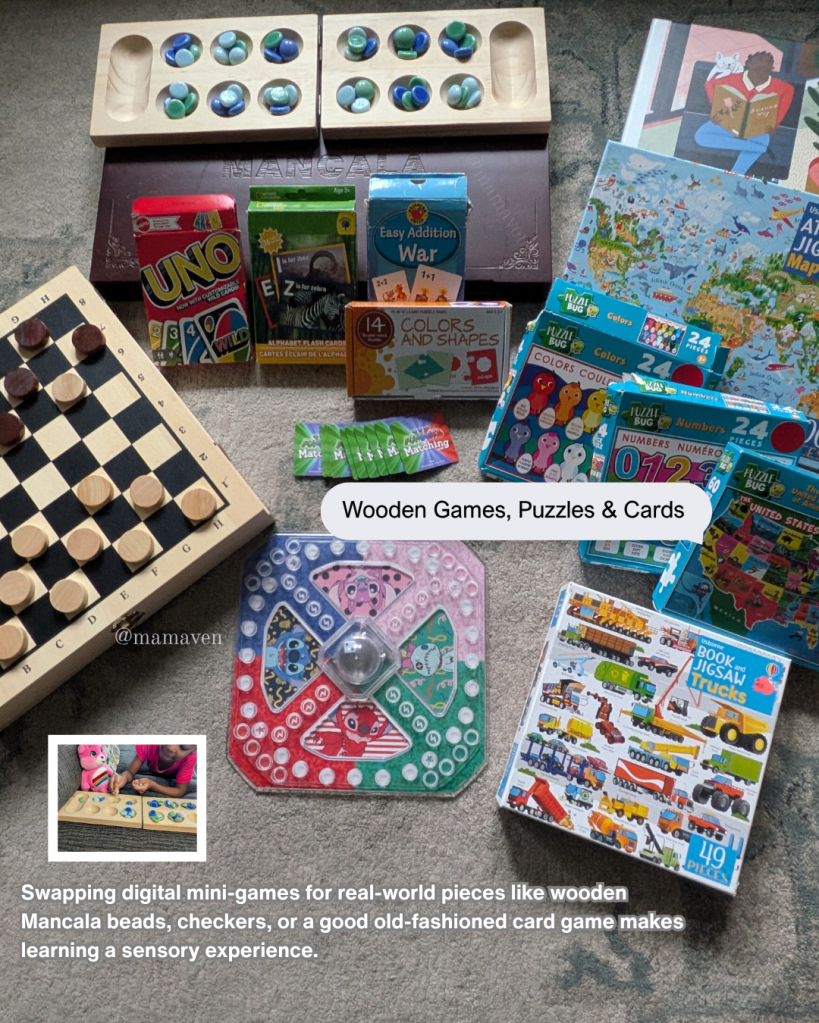
I’m not one to judge someone simply because they like playing games on a tablet or their phone; heck, some of the ones we’ve played together are fun and challenging, but tapping the screen doesn’t hit the same as picking up the wooden pieces or slamming down that last wild draw 4 card to win the game.
Keeping two decorative baskets full of games and puzzles near our living room keeps them in sight and in mind so we are more likely to grab for an activity when we’re sitting around.
Each game or puzzle we find is hand-picked from places like Dollar Tree or Five Below and is intentionally placed in those baskets. For instance, games like mancala & checkers are great for strategy and counting; 50-to-250 piece puzzles for my early elementary kids are great for focus. Games like Memory Match and Uno are awesome for turn-taking and pattern recognition- just to name a few.
We’ve found that keeping these sorts of tactile games and puzzles easily accessible to our children has helped them begin to grasp math and logic concepts that may have been tricky before.
3. Bring Back Retro Media
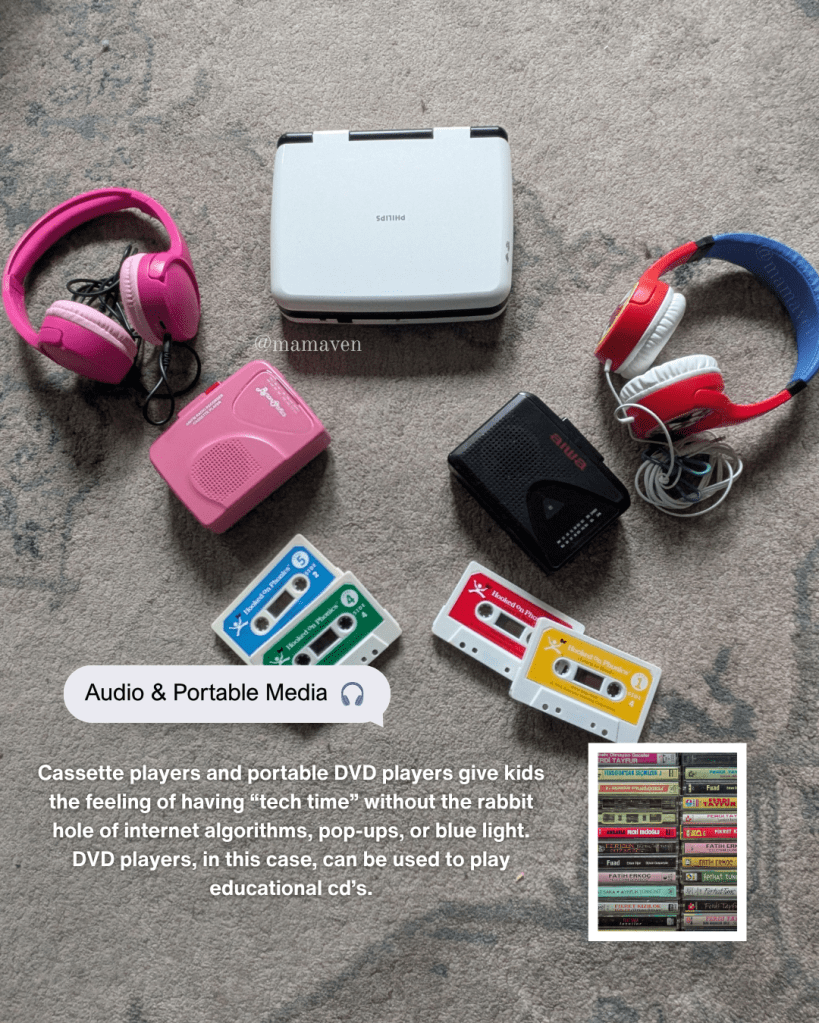
Everything that I’ve mentioned so far could be considered vintage or retro depending on who you ask; however, a cassette or DVD player can make your kids feel like they’re doing something major by operating their own “tech”. At least this type of technology is completely disconnected from the internet.
To be honest, we received our cassette player and tapes from another homeschool family who found much success in teaching their littles to read with the “old-school” Hooked On Phonics sets. I figured if it worked for them, we would at least see if it could work for us. And it does! So we stuck with it.
Yes, I know that a portable DVD player has a screen and screens are what we are trying to avoid. But I like to share this because hack as a reminder that you can play CD’s on a portable DVD player to listen to music.
In the same way as starting up a vinyl record, hitting play to start a CD or cassette tape can be fun for the kids and great for when you need 20 minutes of quiet time to work with another sibling!
4. Electronic MeReaders
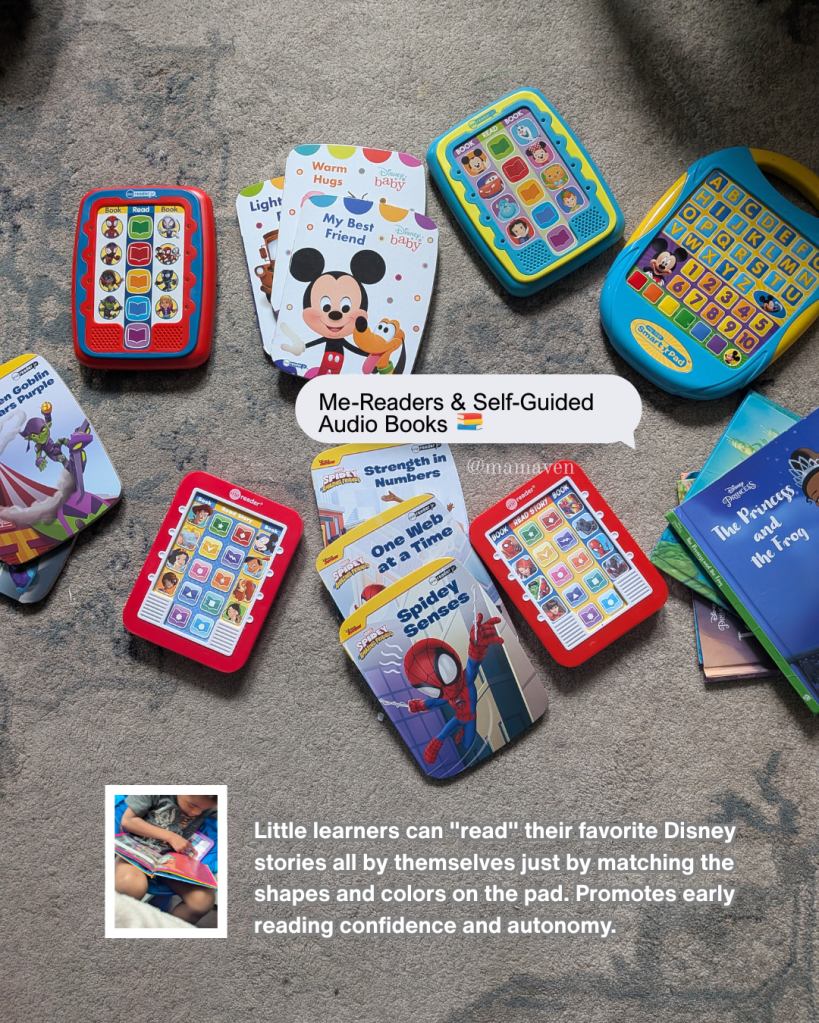
To encourage independent reading with our little ones who still need help with the big words, MeReaders are the answer.
When you purchase a MeReader, you’re getting a set of 8 stories which features some of Disney’s favorite characters and comes with an audio pad.
Once your child receives the set, all they would have to do is pick a book, match the shapes and colors on the page, then press the buttons on the pad. Each shape will read each page aloud based on the story they’ve chosen.
Since introducing my children to MeReaders, they pick up books with confidence even when they may not know all the words. It’s nice to see what stories they gravitate towards, and it’s a bonus when they don’t have to wait for a parent to dive into the pages of a new adventure.
While slowly building this essentially screen- free collection, I’ve come to realize that the best “modern” learning tools have been the retro ones we forgot about!
Which one of these are you trying first? Let me know!



Leave a Reply